
How it's made
From silkworm to saree
A silk saree passes through many hands. These are the steps, and we check the work along the way. The warp is the set of threads that run along the saree. The weft runs across it.
Planning
-
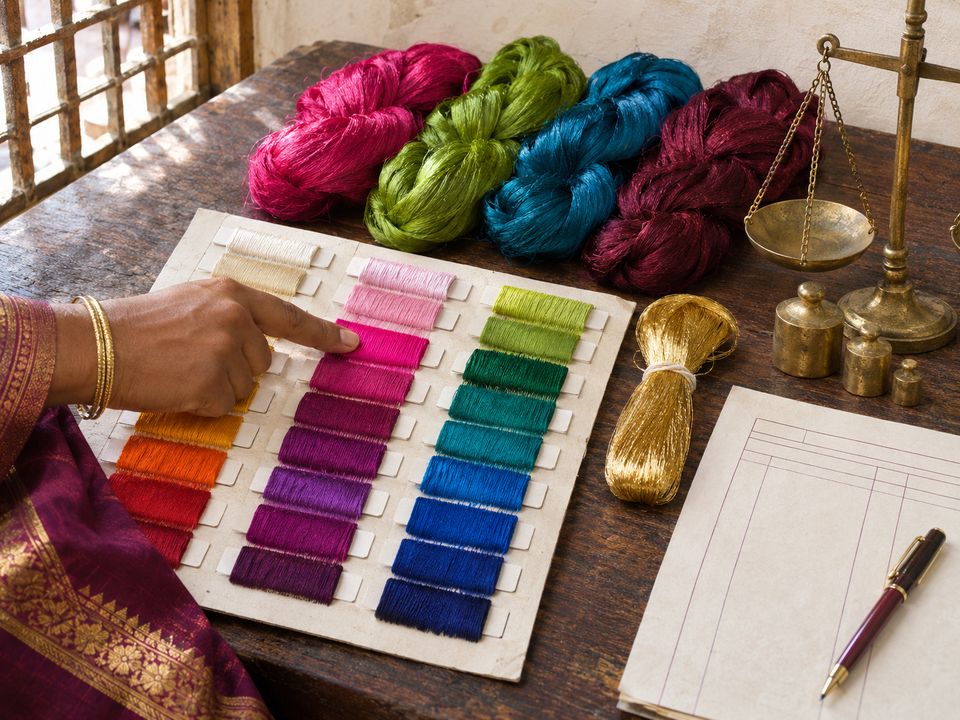
Specification
We decide the color, the type of silk, the weight, the length, the border and the pallu before anything else.
AI-generated illustration
-
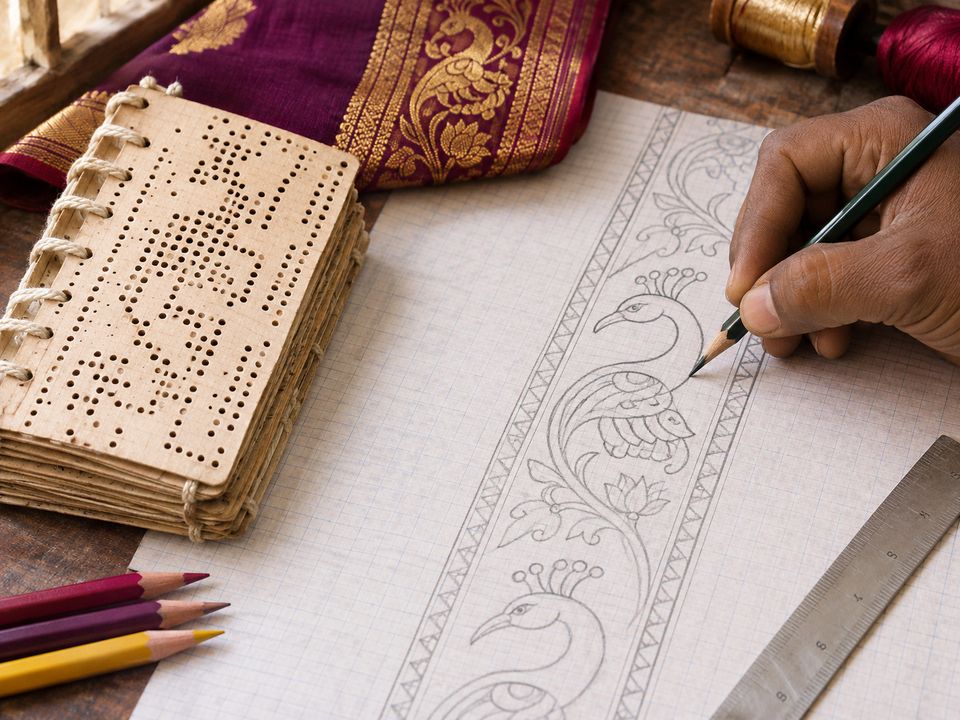
Design
For our fully handmade pieces, the motifs are drawn on graph paper and punched into physical cards that guide the jacquard on the loom. For our semi-automatic pieces, the design goes into a computer that controls the jacquard.
AI-generated illustration
Silk from the silkworm
-
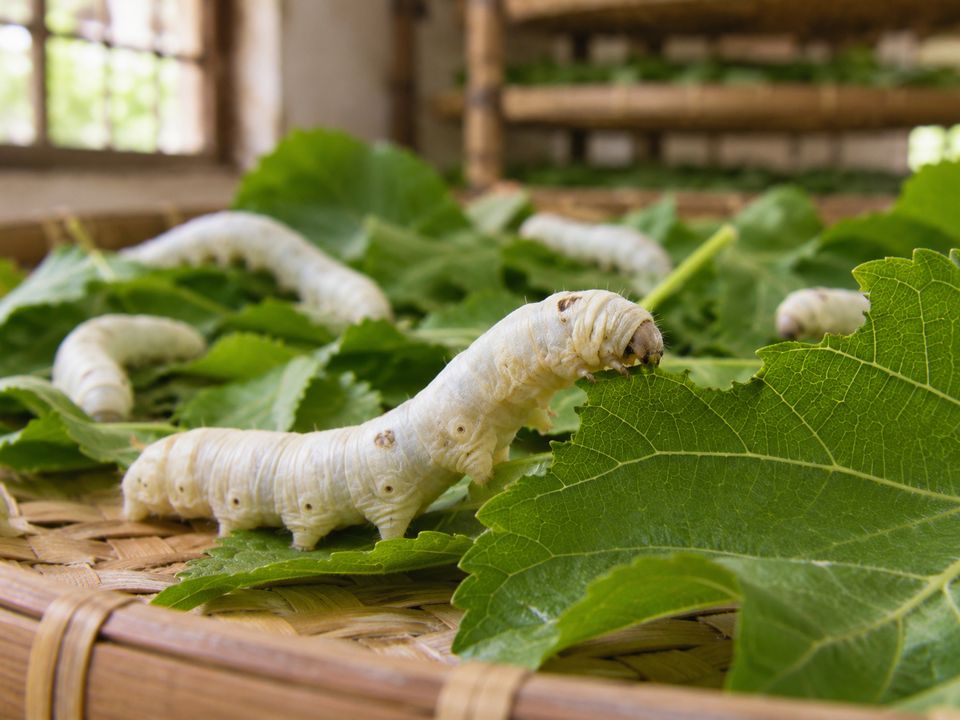
Mulberry and silkworm rearing
Silk farming is called sericulture. Silkworms are raised on fresh mulberry leaves and eat for weeks before they are ready to spin.
AI-generated illustration
-
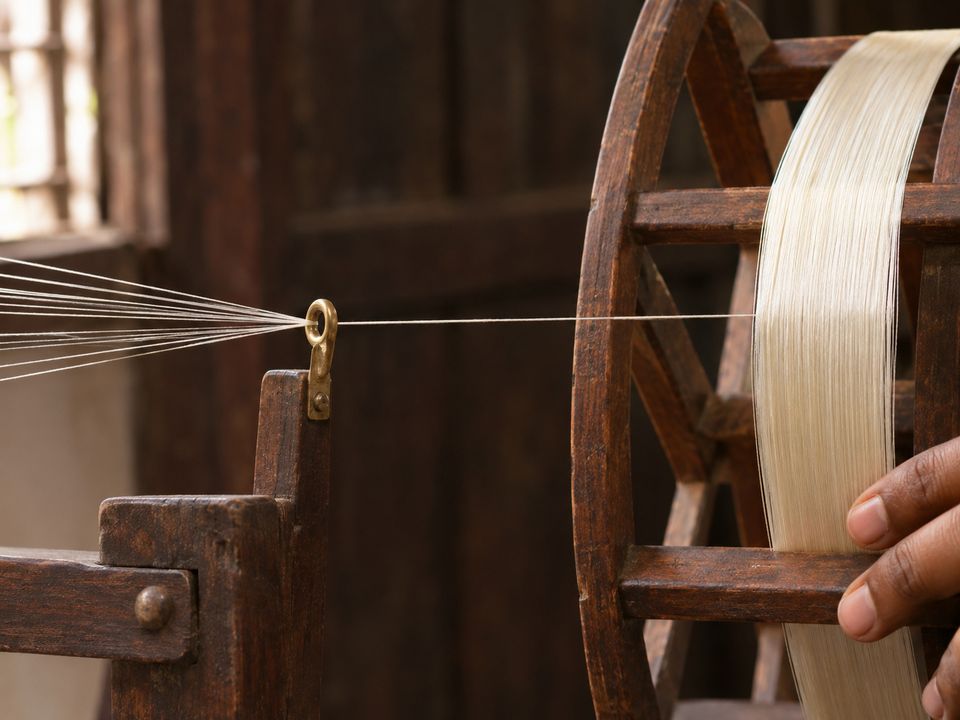
Reeling
Fine threads of silk are spun together to make one thread of raw silk.
AI-generated illustration
Preparing the yarn
-
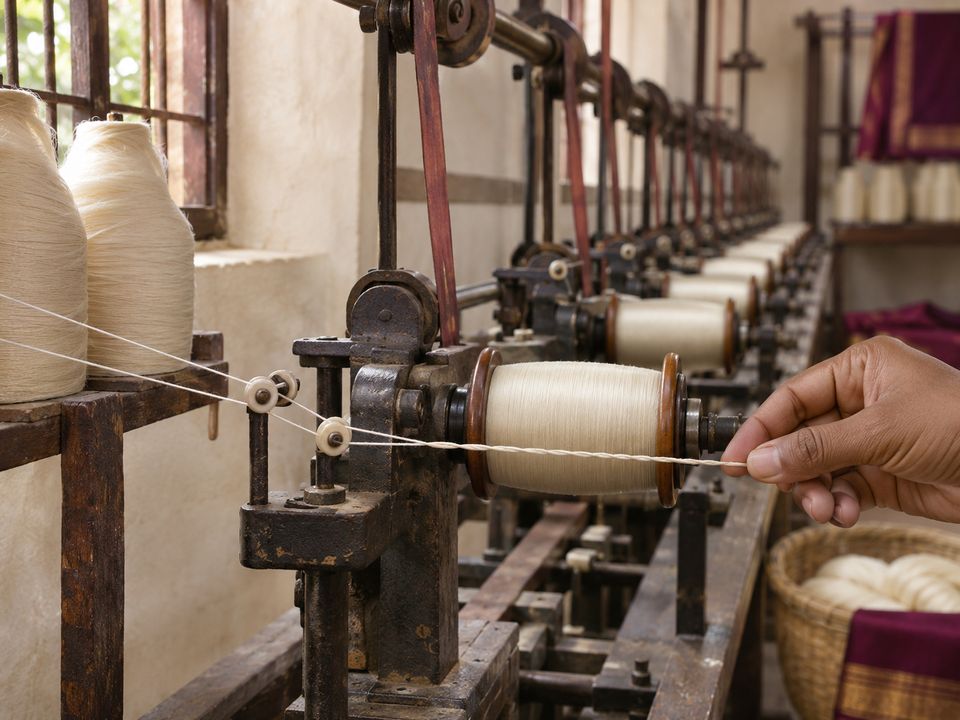
Twisting (throwing)
Strands of raw silk are doubled and twisted into yarn. The warp is twisted from 1 to 4 ply, depending on the weight of the saree.
AI-generated illustration
-
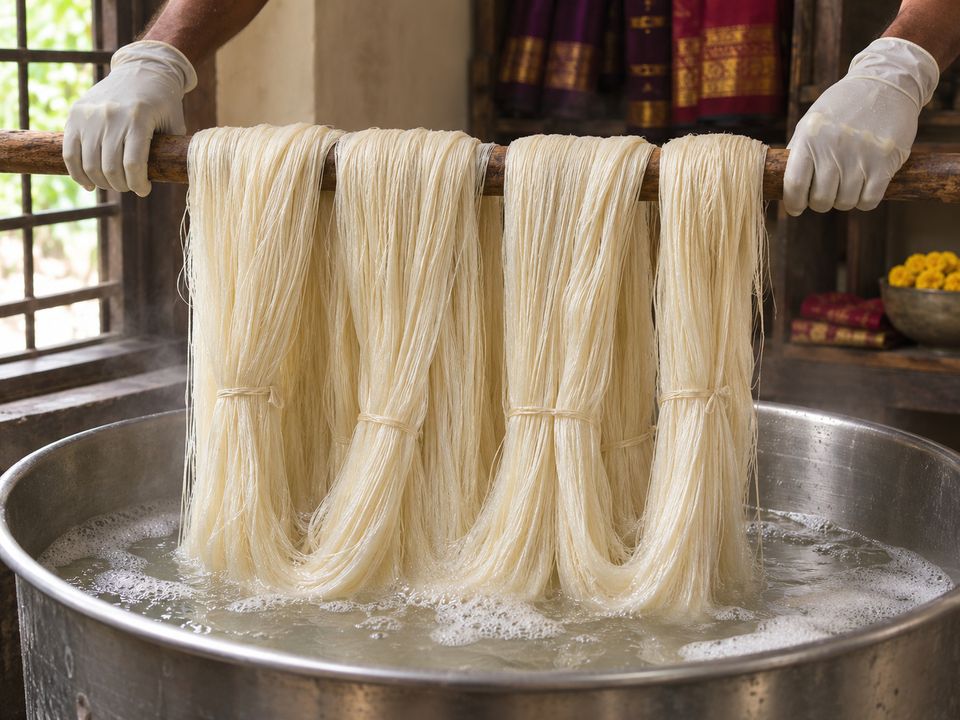
Degumming
The yarn is boiled to take out sericin, the natural gum in silk. This leaves it soft and bright.
AI-generated illustration
-
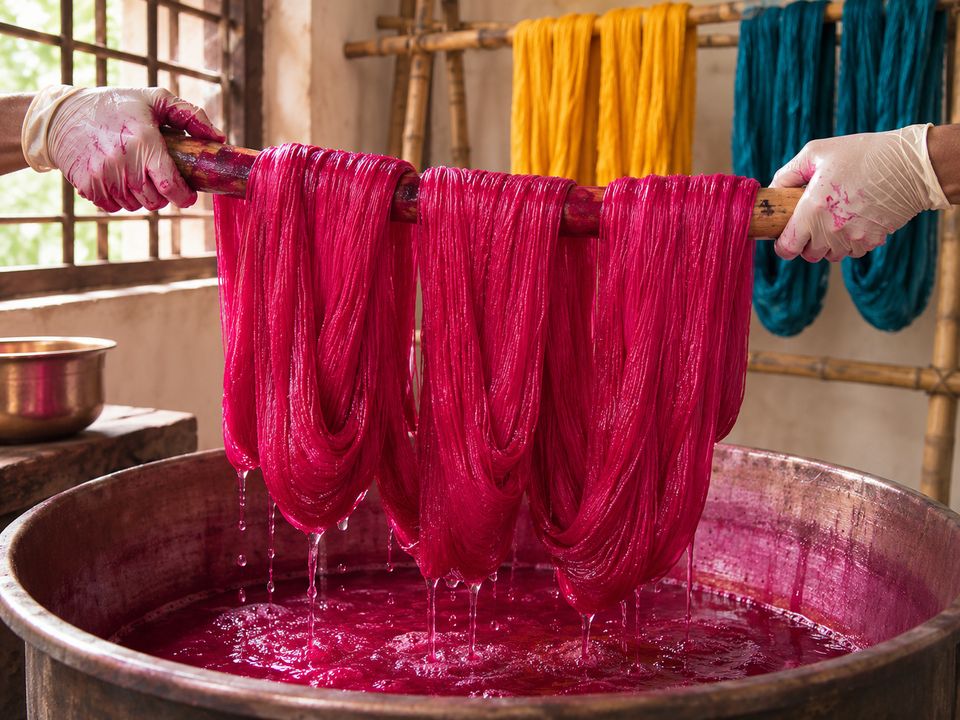
Dyeing the warp and weft
The warp and weft are dyed in hanks to the color in the specification, then dried.
AI-generated illustration
-
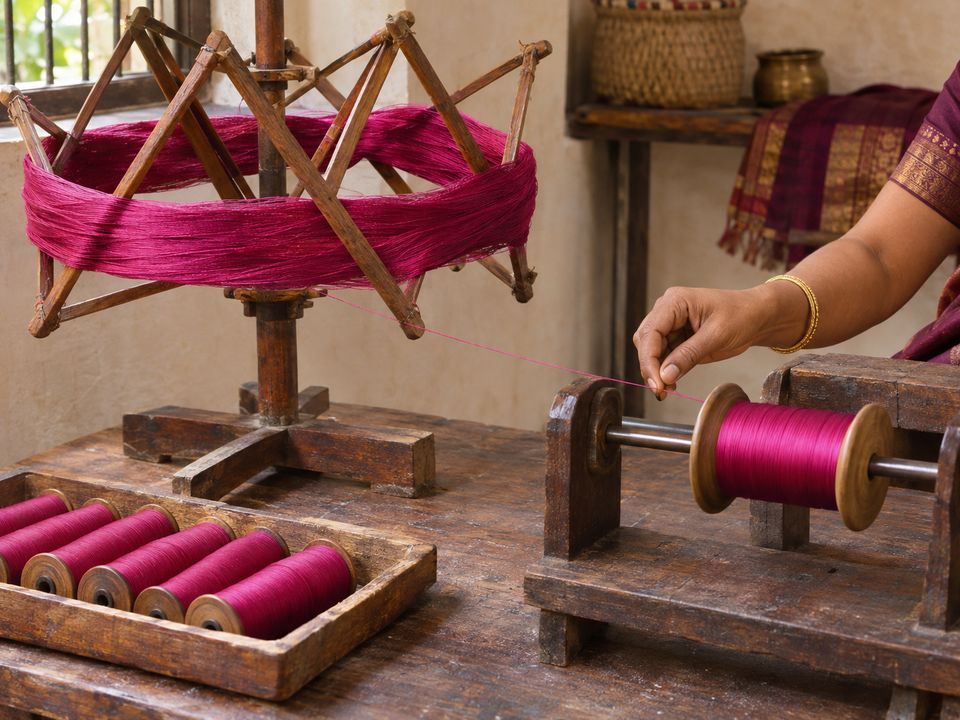
Bobbin winding
The dyed hanks are wound onto bobbins, ready for warping.
AI-generated illustration
-
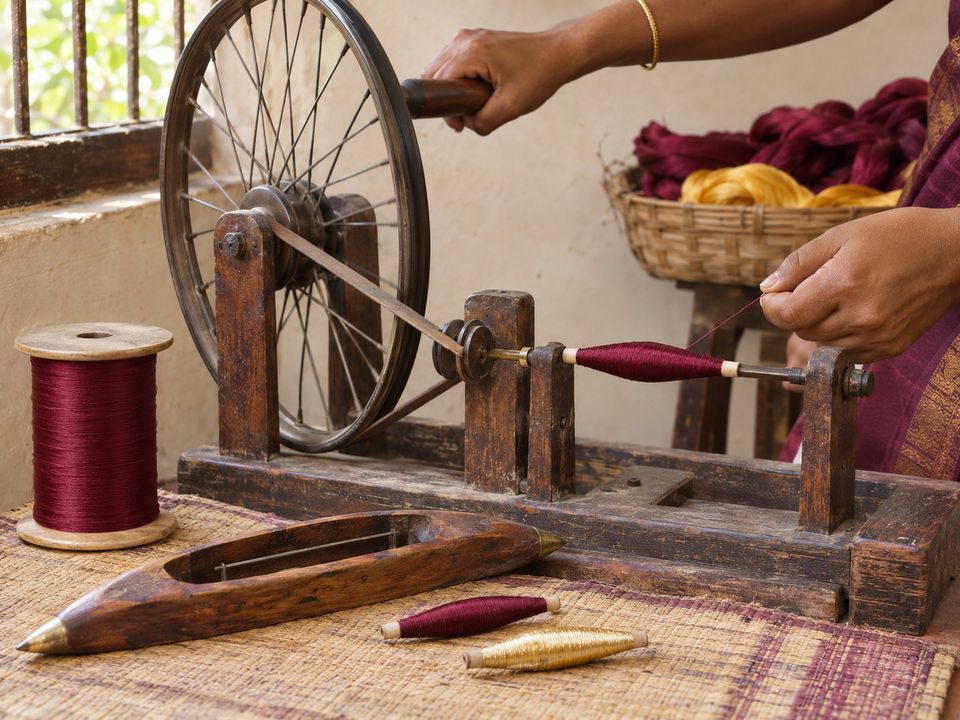
Pirn winding
The weft silk and zari are wound onto pirns, the small spools that sit inside the shuttle.
AI-generated illustration
Setting up the warp and loom
-
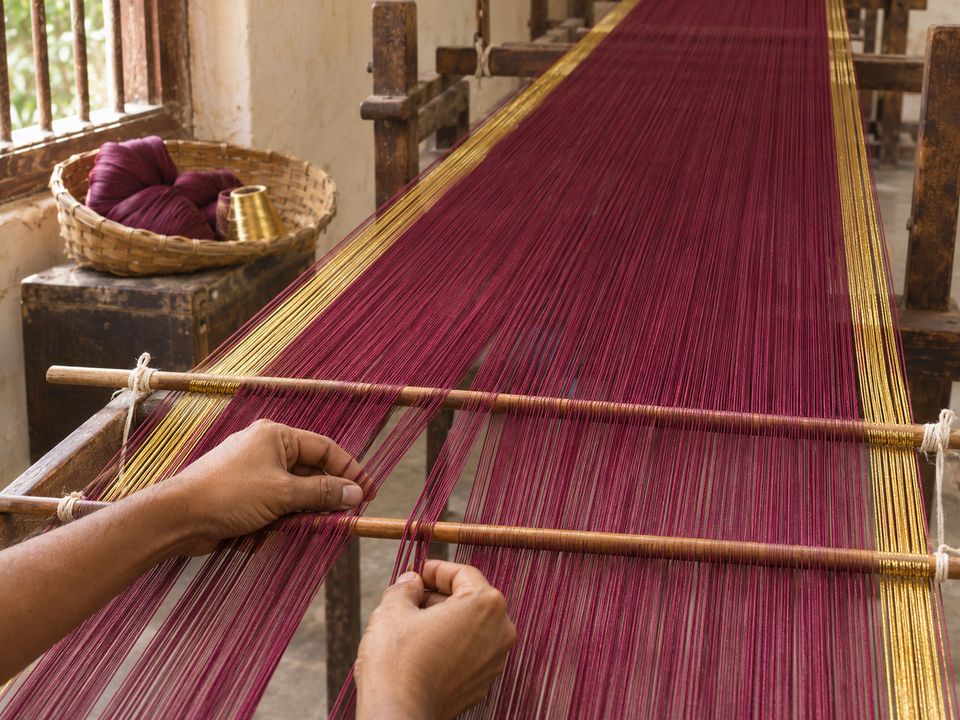
Warping
The warp threads are laid side by side at the set length and width, with zari for the border alongside them. This decides how many sarees the warp will make.
AI-generated illustration
-
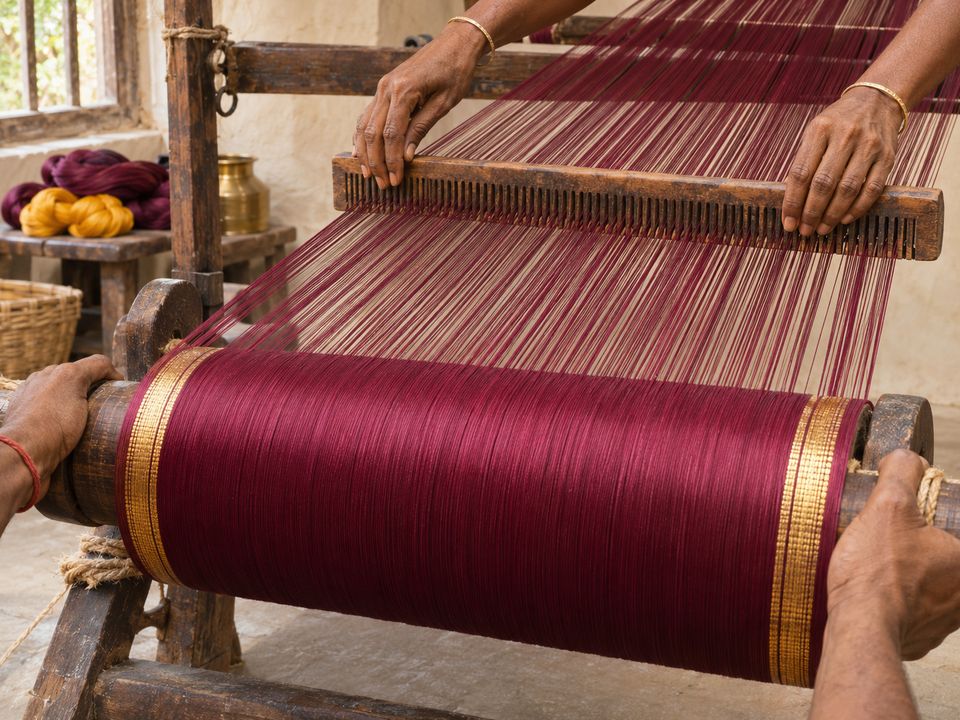
Rolling the warp (beaming)
The warp is rolled tightly and evenly onto the warp beam, which goes on the loom.
AI-generated illustration
-
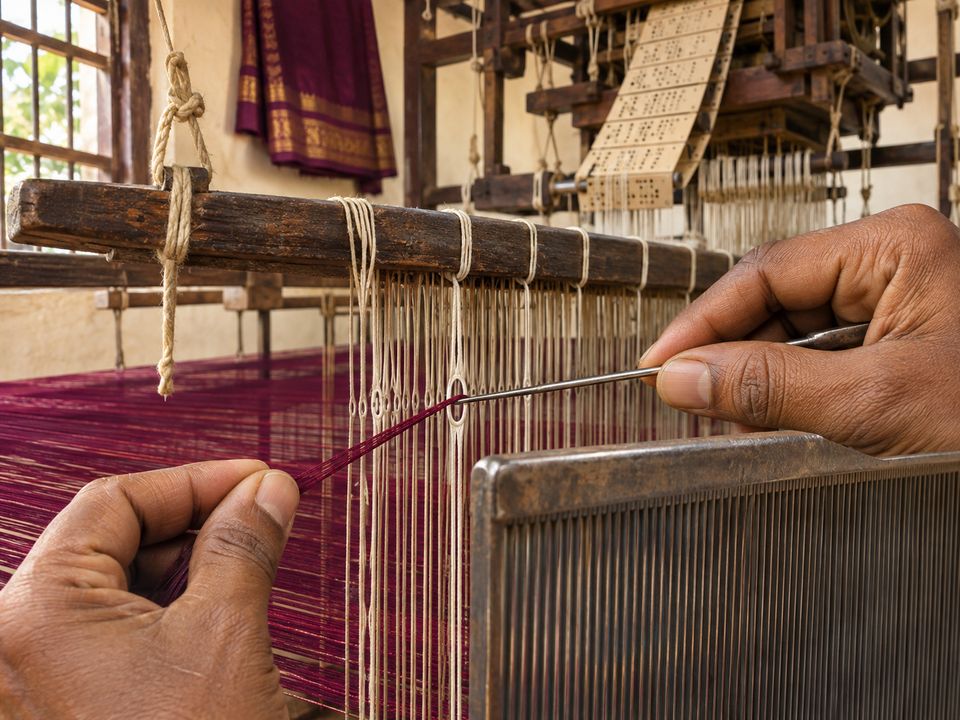
Setting up the loom
Each warp thread is passed through the heddles (drawing-in) and the reed (denting), or tied by hand to the last warp on the loom (tying-in). The reed sets the width of the saree.
AI-generated illustration
Weaving
-
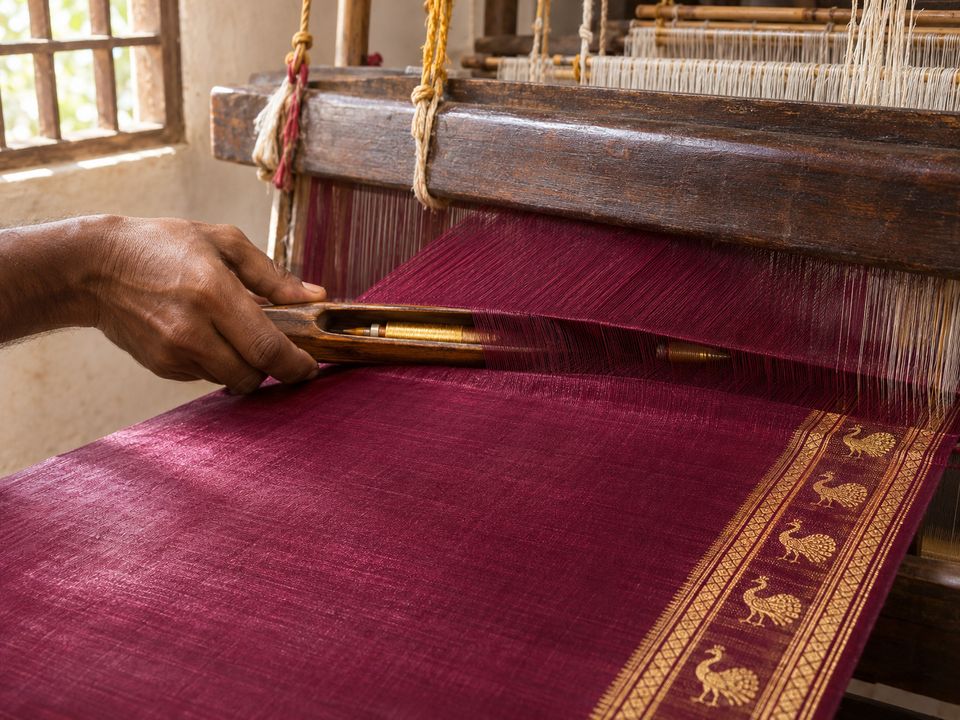
Weaving the length
On a handloom, the weaver opens the warp (shedding), passes the shuttle across (picking) and presses the weft into place (beating), thousands of times. One warp makes one long length holding several sarees, each with its body, border and pallu.
AI-generated illustration
After the loom
-
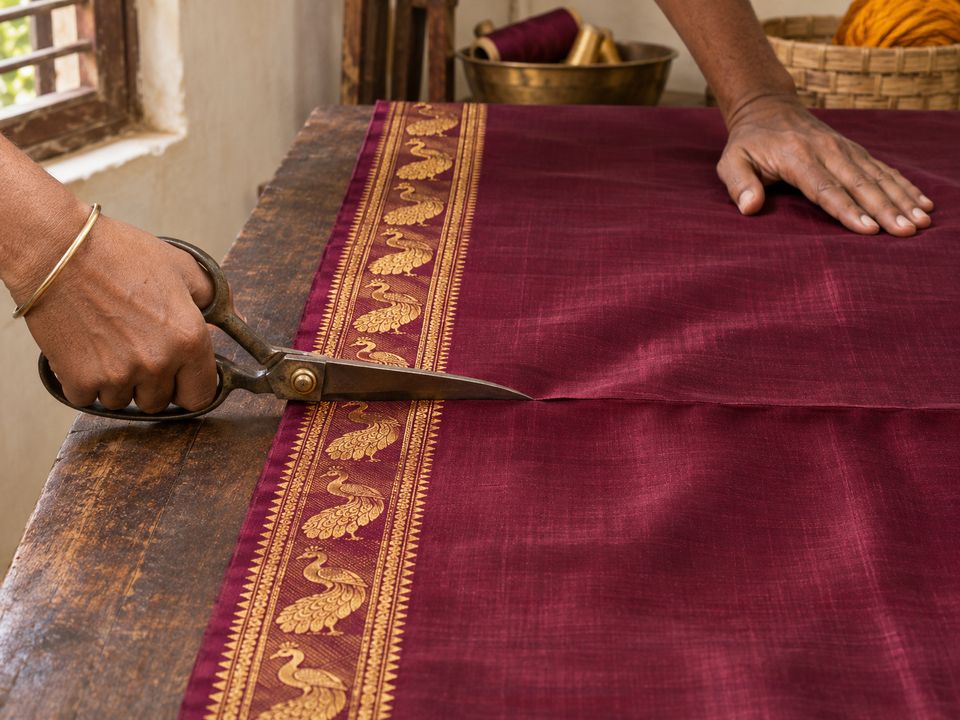
Cutting
The finished length comes off the loom and is cut into single sarees.
AI-generated illustration
-
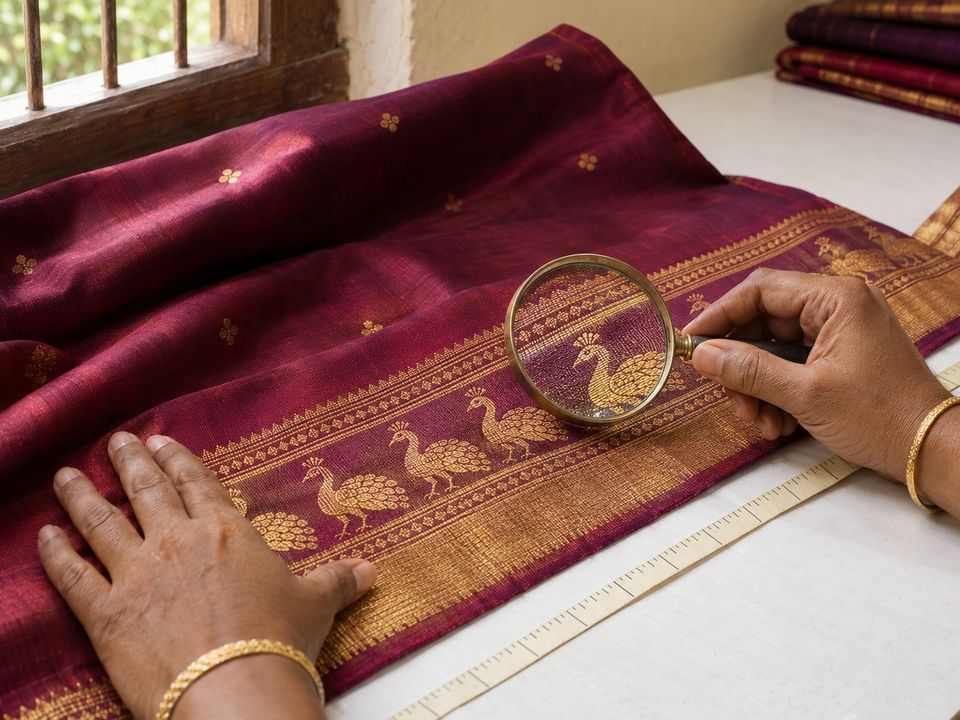
Quality check
Each saree is checked from end to end for broken threads, floats, breaks in the pattern and color match, and for length, width and weight.
AI-generated illustration
-
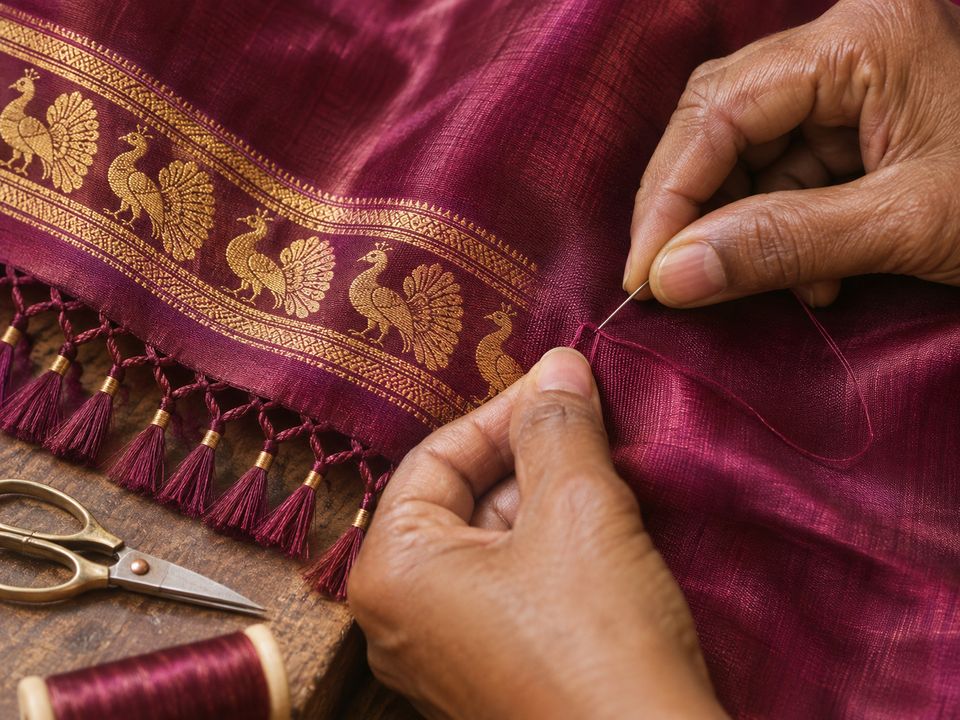
Mending and finishing
Small faults are mended by hand, loose threads are trimmed, the fringe is finished and the saree is pressed.
AI-generated illustration
-
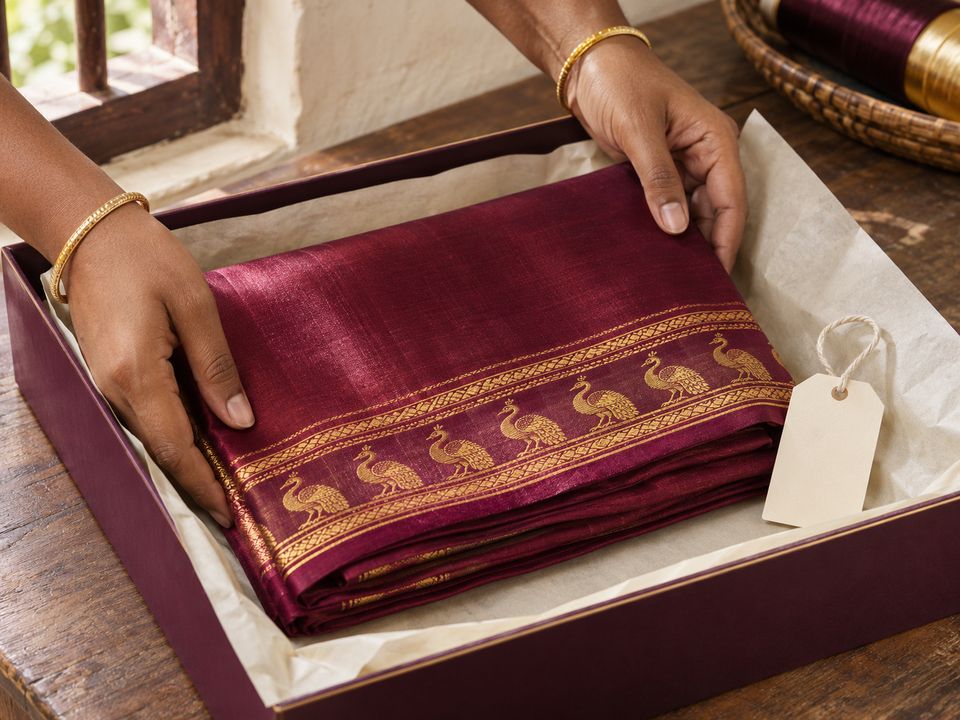
Packaging
The saree is folded, tagged and packed, ready for you.
AI-generated illustration
Two ways we weave
- Fully handmade. Physical punch cards guide the jacquard. Hand work means no two pieces are exactly the same. A small change in the weave is the mark of a person at the loom, not a fault.
- Semi-automatic. A computer controls the jacquard in place of punch cards.
Ask us which way a piece was made.
How we check quality
- The yarn. We check that the thread is even before it goes on the loom.
- The color. We check the color against the specification after dyeing.
- The weave. We watch for missed threads and uneven borders while the piece is on the loom.
- The finished piece. We look over every piece from end to end before it reaches you.